Social Media Sentiment Analysis as a Predictor for Association Football Wager Modifications and Virtual Casino Perk Activations
Kirjoittanut Sage Carter · 3.10.2026
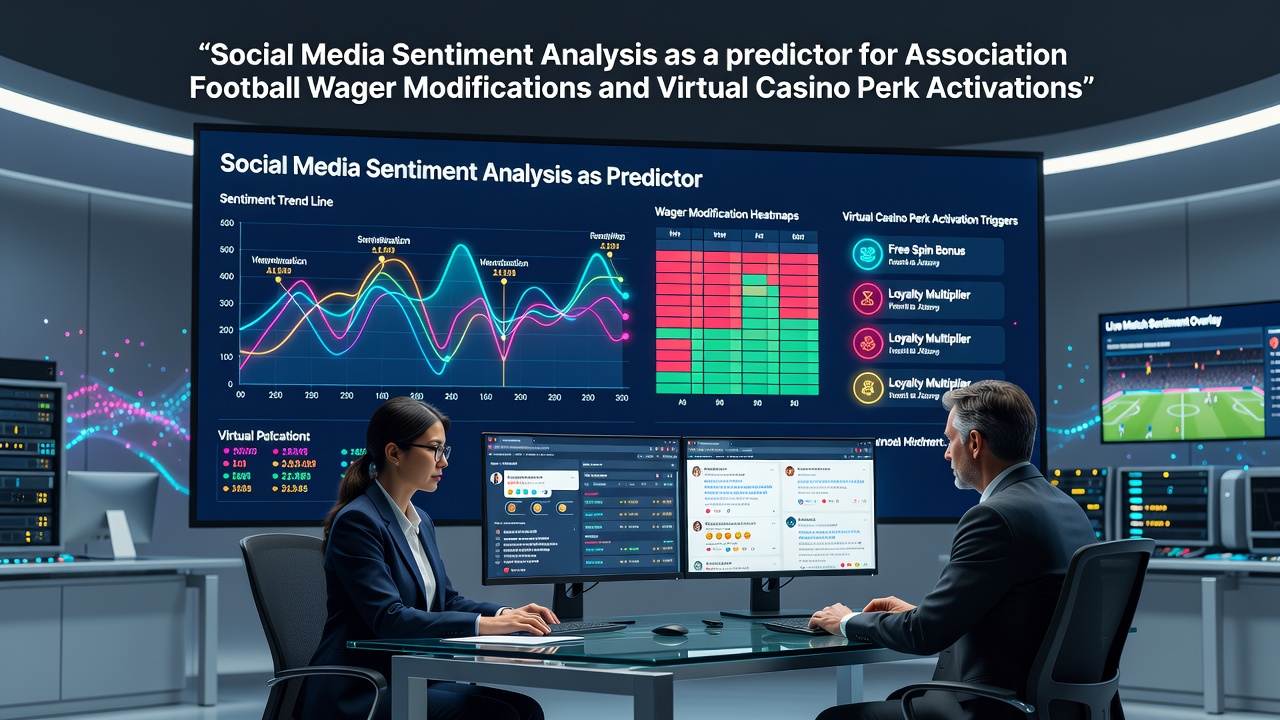
Social Media Sentiment Analysis as a Predictor for Association Football Wager Modifications and Virtual Casino Perk Activations
Operators in regulated markets now integrate social media sentiment tools directly into their risk engines, and these systems scan millions of posts across platforms each day to flag shifts in public mood toward specific teams or players before adjusting live odds. Data from major European leagues shows that spikes in negative sentiment around a squad often precede rapid recalibrations in point spreads and total goals lines, while positive surges correlate with increased handle on certain prop bets. Researchers at institutions tracking digital engagement have documented how natural language processing models trained on match-related keywords achieve measurable accuracy in forecasting volume changes within the first hour after a post volume threshold is crossed.
Core Mechanisms Behind Sentiment-Driven Adjustments
Algorithms parse text for context around key terms such as player injuries, managerial decisions, and tactical setups, then assign polarity scores that feed into automated pricing models used by bookmakers. When aggregate sentiment crosses predefined bands, systems trigger alerts that prompt human traders to tighten or widen margins on in-play wagers. Observers note that this process operates continuously during match windows, and it draws from geolocated posts to account for regional fan bases whose opinions carry heavier weight in certain markets. In October 2026, several operators reported integrating additional layers of real-time translation for non-English content to capture sentiment from South American and Asian audiences during Champions League fixtures.
Data Sources and Model Training
Platforms supply raw streams that analysts clean for bots and duplicate content before feeding cleaned datasets into recurrent neural networks and transformer architectures. Training sets incorporate historical outcomes alongside contemporaneous social volume, allowing models to learn which sentiment patterns reliably precede line movements of more than 0.25 goals or 5 percent shifts in implied probability. A report issued by the Canadian Centre for Gaming Research outlines how one operator reduced variance in its live book by 12 percent after incorporating Twitter-derived signals over a full season. Those same models also monitor mentions of casino-style promotions, linking spikes in conversation about particular bonuses to redemption rates that operators can forecast with increasing precision.
Links to Virtual Casino Perk Activations
Virtual entertainment venues that share backend infrastructure with sportsbooks often activate loyalty credits or free-spin packages when sentiment indicators suggest elevated engagement around concurrent football events. The connection arises because operators observe that users who engage with match-related social content demonstrate higher session lengths on slot titles and table games, prompting automated reward tiers to unlock once thresholds are met. Figures from industry datasets indicate that such activations occur most frequently during midweek European fixtures when overall platform traffic rises. Systems cross-reference sentiment polarity with user account histories to tailor offers, for instance issuing deposit matches to accounts that have previously interacted with certain leagues. And because these triggers run on the same data pipelines that adjust wagering markets, a single sentiment surge can simultaneously shift football odds and unlock casino incentives for overlapping user segments.
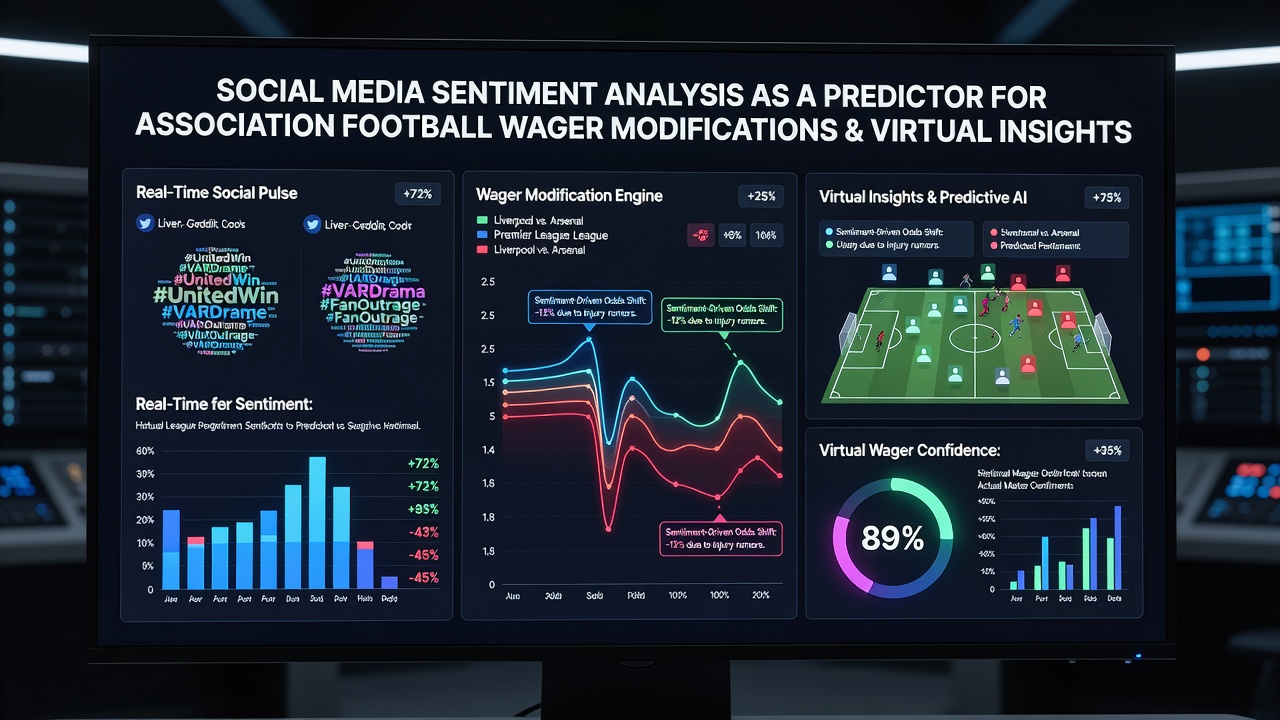
One documented case from the 2025-2026 season involved a Serie A match where a sudden wave of positive posts about an underdog side prompted both a tightening of the draw line and an immediate release of casino free credits tied to that league's markets. Regulators in jurisdictions such as those overseen by the Malta Gaming Authority require operators to log these automated decisions, creating audit trails that researchers later examine for patterns. External validation studies published through the University of Sydney's gambling research unit confirm that sentiment signals add incremental predictive value beyond traditional inputs like team form and weather data, though the magnitude varies by competition and time of day.
Regional Variations and Regulatory Context
European operators tend to emphasize sentiment derived from local-language posts, whereas North American platforms incorporate broader English-language streams and increasingly Spanish content for Liga MX coverage. Australian regulators have examined similar systems under responsible gambling frameworks, noting that real-time sentiment monitoring can also flag potential harm indicators when negative mood clusters appear around high-stakes events. Those reviews highlight the dual-use nature of the technology: it refines pricing accuracy while simultaneously supporting compliance monitoring. In October 2026, several multi-jurisdictional groups began piloting shared sentiment datasets across borders to test whether cross-market correlations improve forecast reliability for international tournaments.
Technical Challenges and Accuracy Metrics
Noise from sarcasm, meme language, and coordinated campaigns continues to challenge model performance, requiring ongoing human oversight and periodic retraining. Accuracy rates reported in peer-reviewed evaluations range between 68 and 74 percent for directionally correct line movement predictions when sentiment is combined with traditional statistical inputs. Systems that ignore context around ironic or humorous posts show measurable degradation during high-profile derbies where fan banter dominates feeds. Operators mitigate this through ensemble methods that blend multiple classifiers and apply confidence thresholds before executing market moves or perk releases.
Conclusion
Integration of social media sentiment analysis into football wagering and virtual casino operations has become standard practice across regulated markets, supported by documented correlations between digital mood indicators and both odds adjustments and reward activations. As platforms refine their models through additional language coverage and cross-regional data sharing, the precision of these predictive links continues to evolve. Observers tracking developments into late 2026 note that the same underlying signals now serve multiple operational functions simultaneously, linking live market management with promotional systems in ways that earlier separate infrastructures could not achieve.